
Are Formula Preparation Machines Actually Worth It? A Cost & Safety Perspective
If you’re planning to formula feed your baby (or combination feed), there’s a good chance you’ve been shown adverts for formula preparation machines.
They’re marketed as a clever, convenient, must-have gadget for tired parents.
And honestly? I can absolutely see the appeal.
When you’re exhausted, feeding around the clock, and functioning on very little sleep, anything promising to make life easier can feel like a no-brainer.
But I found myself wondering…
Are they actually worth it?
So I did some rough calculations.
First, a very important disclaimer
This is not feeding advice.
Every baby drinks different amounts at different stages, and feeding choices are personal.
The calculations below are simply an illustration, using average estimated feeding volumes to compare relative costs over time.
If you’re looking for accurate infant feeding information, I strongly recommend visiting First Steps Nutrition Trust directly.
My rough comparison
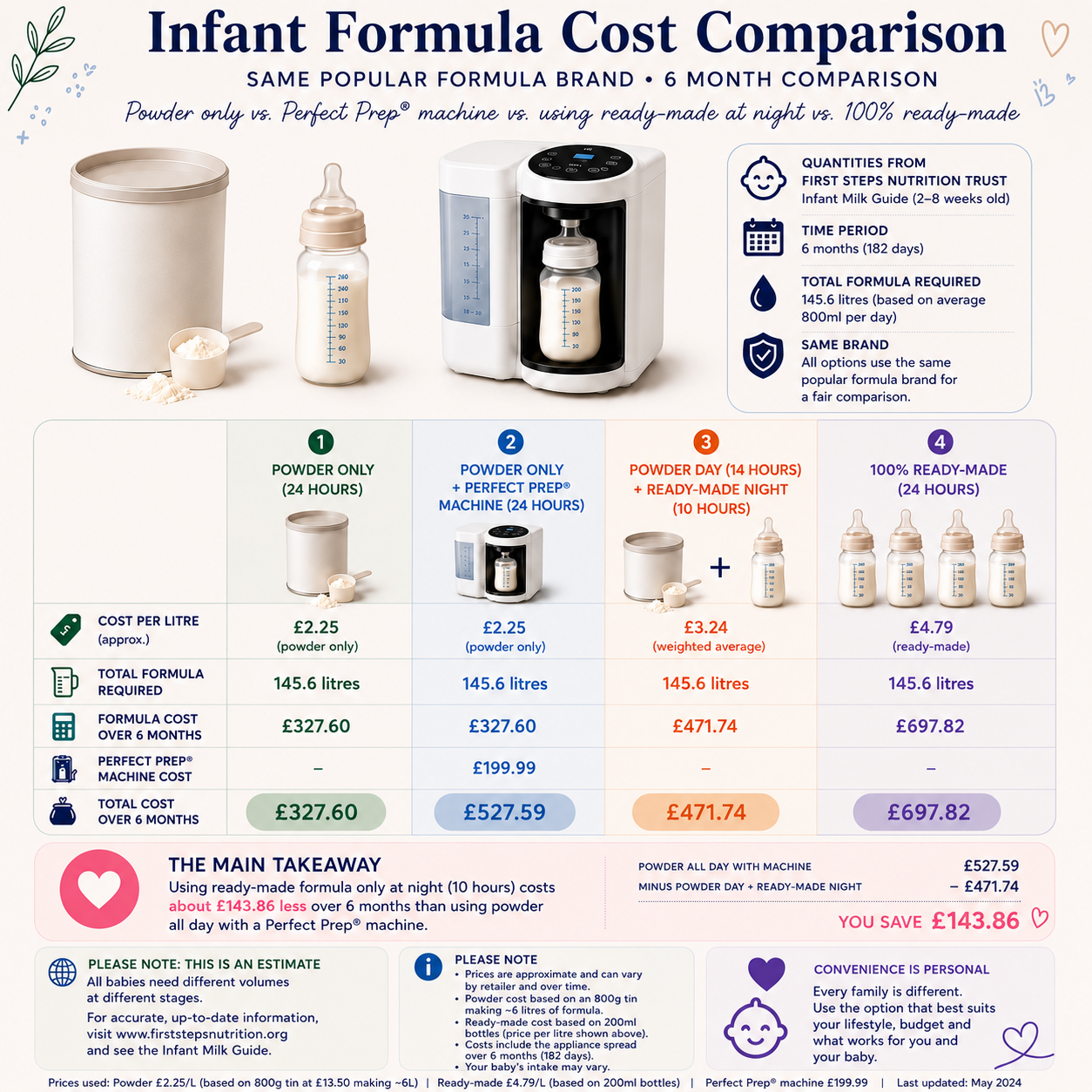
I compared four scenarios over the first six months:
Powdered formula only
Powdered formula prepared using a formula prep machine
Powdered formula in the daytime + ready-made liquid formula overnight
Ready-made liquid formula all of the time
To keep things fair, I used the same formula brand across all comparisons.
Using estimated average intake, my calculations suggested:
powder only was the cheapest option
100% ready-made was the most expensive
but interestingly…
Using ready-made formula overnight and powdered formula in the day worked out cheaper than buying a formula prep machine and using powdered formula all day.
Did that surprise you? I can’t say it did me, but the way the machines are marketed would have you believing otherwise.
Because many families buy these machines assuming they’re the most cost-effective way to gain convenience, but when you factor in the cost of the machine itself? That may not actually be the case.
See the graphics below for more detail on my analysis.
But cost isn’t the only consideration
This is where things get more important…
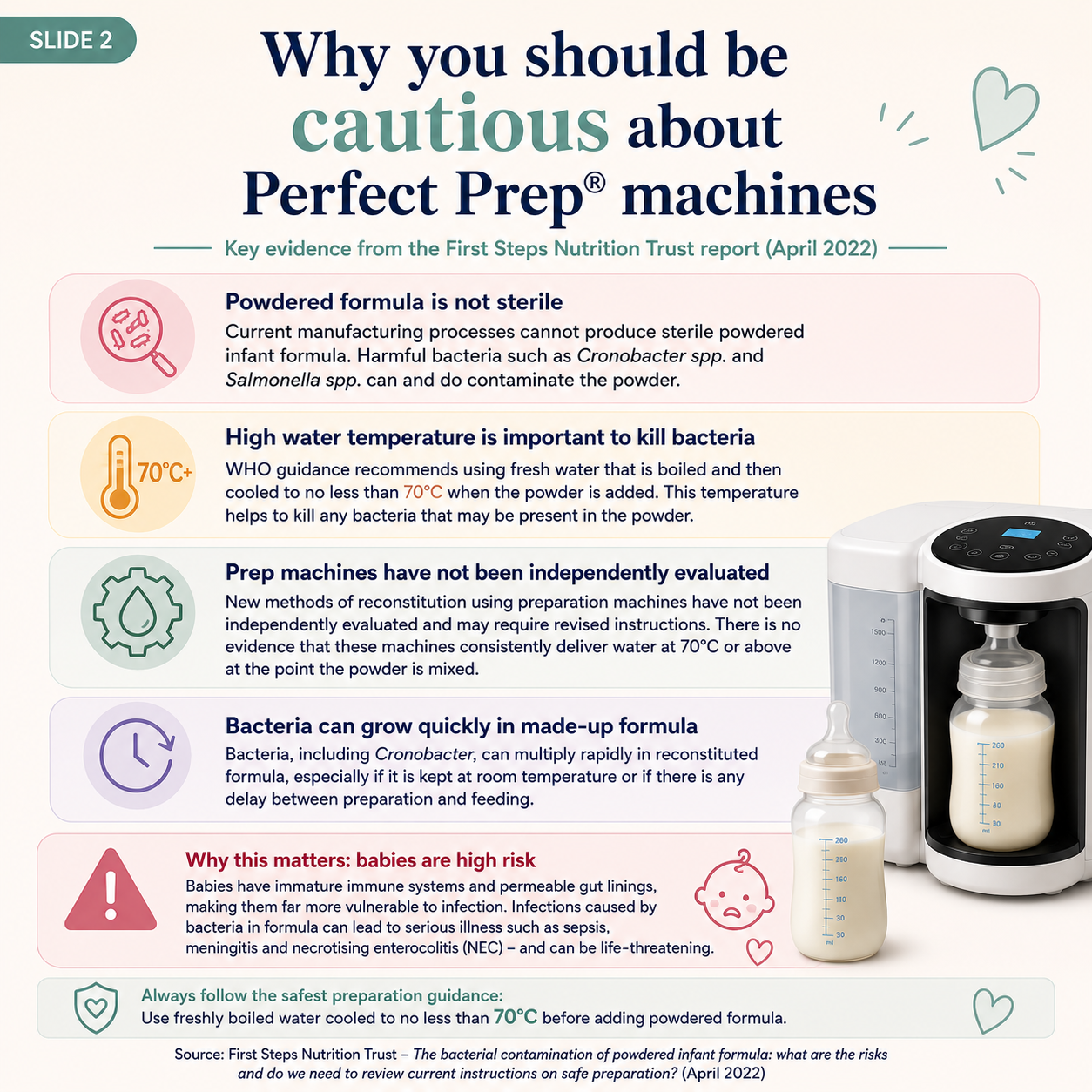
According to First Steps Nutrition Trust, powdered infant formula is not sterile. That means harmful bacteria can often be present in the powder itself, because of that, safe preparation matters.
First Steps explains that water needs to be hot enough during preparation to reduce bacterial risk. They also raise concerns around automated preparation machines and whether they consistently prepare feeds in a way that aligns with established safe preparation guidance. (Read more on that here)
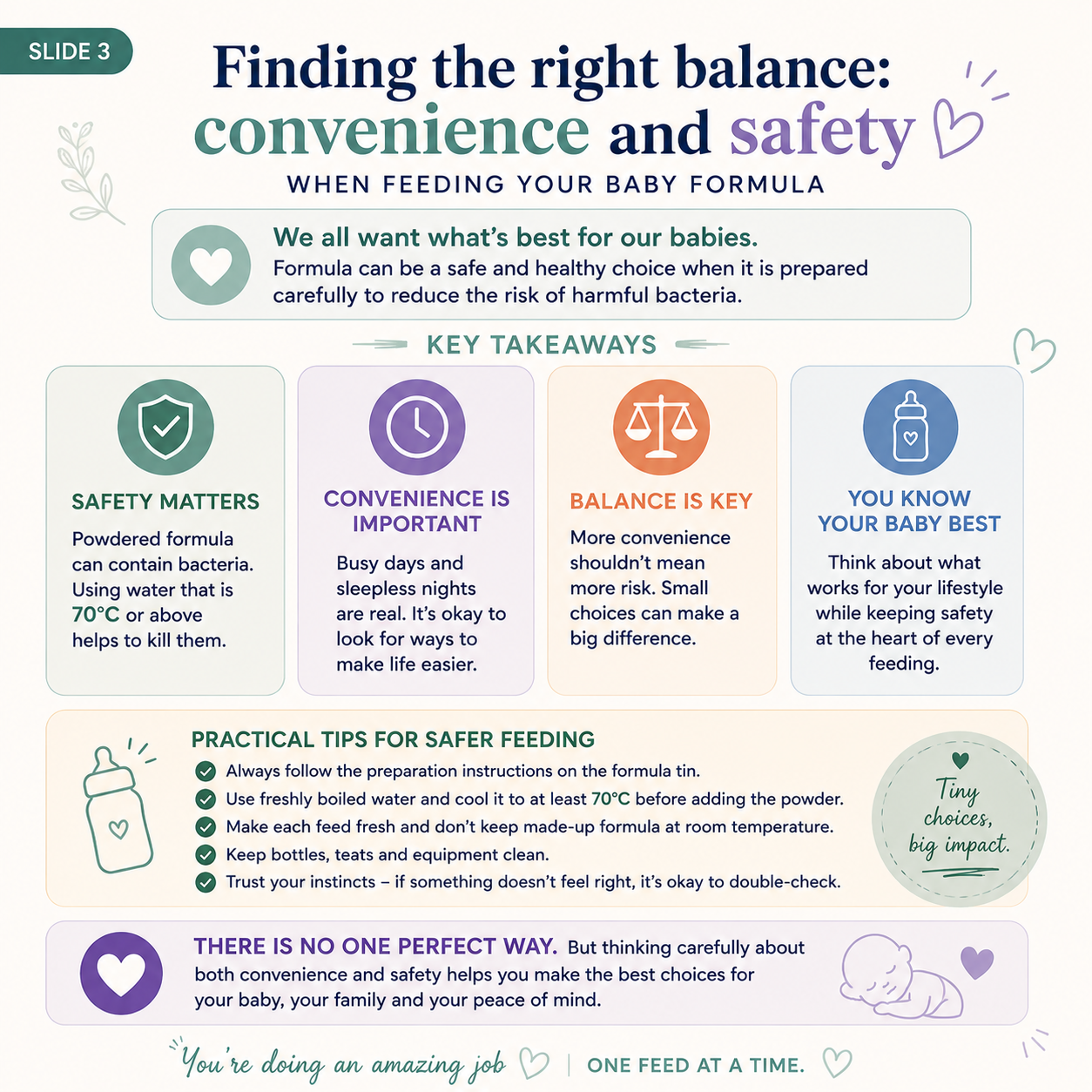
That doesn’t mean every family using one will experience a problem - but it does mean convenience should be weighed carefully against what we know about safer preparation methods.
The 3am question
This is what really got me thinking.
If the main goal is overnight convenience…
is a machine in the kitchen really easier than having ready-made liquid formula available?
⛔️ No walking downstairs.
⛔️ No pressing buttons.
⛔️ No waiting.
⛔️ No sleepy maths.
⛔️ No standing barefoot on cold tiles at 3am.
If a family is already choosing formula feeding and convenience (and sleep) is the priority, this may be worth thinking about.
Final thoughts
I’m not here to tell anyone what they should do. Families make feeding choices for all sorts of valid reasons, but marketing is powerful(!).
And expensive gadgets can sometimes feel like essentials when they may not be.
If you’re weighing up convenience, cost, and safety, it may be worth stepping back and asking: What actually makes the most sense for our family?
And if you want reliable information about infant feeding, preparation, and formula safety:
First Steps Nutrition Trust is an excellent place to start.
